

Across Africa, an irreplaceable cultural heritage is disappearing at an alarming rate. Traditional knowledge systems, oral histories, indigenous languages, and cultural practices—accumulated over millennia—face unprecedented threats from globalization, urbanization, conflict, and generational disconnect. Every day that passes without documentation represents the potential loss of wisdom, stories, and cultural innovations that cannot be recovered once they vanish from living memory.
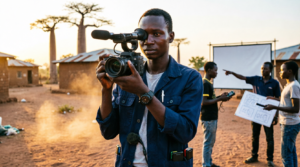
EduFilm’s ambitious goal to archive 100+ cultural stories represents more than a preservation effort—it embodies a revolutionary approach to cultural continuity that bridges traditional knowledge systems with modern digital technology. By training communities to document their own heritage through film and digital storytelling, EduFilm is creating sustainable models for cultural preservation that honor both ancestral wisdom and contemporary innovation.
100+
Cultural stories and traditions to be archived by EduFilm’s digital preservation program
The Crisis of Cultural Loss in Contemporary Africa
Understanding the urgency of digital cultural archiving requires recognizing the multiple forces that threaten traditional knowledge systems across Africa. These threats operate simultaneously across different levels of society, creating compound pressures that accelerate cultural loss beyond the natural pace of cultural evolution.
Urbanization and Migration Patterns
Rapid urbanization across Africa has created unprecedented disconnection between younger generations and traditional cultural knowledge holders. As young people migrate to cities in search of economic opportunities, traditional knowledge transfer mechanisms—typically dependent on long-term intergenerational relationships—are disrupted or completely severed.
Research on indigenous knowledge preservation indicates that urban migration reduces traditional knowledge transmission by up to 80% within a single generation. Without intentional preservation efforts, cultural knowledge that took centuries to develop can disappear within decades.
Language Endangerment and Cultural Transmission
Africa’s linguistic diversity—with over 3,000 languages spoken across the continent—faces severe threats from globalization and educational policies that prioritize colonial languages over indigenous ones. UNESCO estimates that 40% of African languages are endangered, with many facing imminent extinction as elder speakers pass away without successfully transmitting their languages to younger generations.
Language loss represents more than communication challenges—it embodies the disappearance of unique ways of understanding and organizing knowledge about agriculture, medicine, social organization, and environmental management. Traditional ecological knowledge, in particular, often cannot be accurately translated into other languages, making language preservation essential for environmental sustainability.
“When an elder dies, a library burns to the ground. But when we document their wisdom through digital storytelling, we build new libraries for future generations.”
— African Proverb, adapted for the digital age
Digital Archiving as Cultural Empowerment
Rather than viewing digital technology as a threat to traditional culture, innovative organizations like EduFilm demonstrate how digital tools can become powerful allies in cultural preservation and revitalization efforts.
Community-Controlled Documentation
Traditional approaches to cultural documentation often involved external researchers extracting knowledge from communities for academic or commercial purposes. EduFilm’s approach inverts this dynamic by training community members to document their own heritage according to their own priorities and cultural protocols.
This community-controlled approach ensures that cultural documentation respects traditional knowledge protocols while creating archives that communities can access and use for their own educational and cultural purposes. EduFilm’s cultural documentation training has empowered over 150 community knowledge keepers to create digital archives that serve both preservation and educational functions.
Multimedia Knowledge Preservation
Traditional written documentation, while valuable, cannot capture the full richness of oral cultures that rely on performance, music, visual arts, and embodied practices to transmit knowledge. Digital archiving allows for comprehensive multimedia documentation that preserves not just information but also the cultural contexts and performance traditions through which knowledge is traditionally shared.