
Finding reliable information about art and culture organizations in South Sudan can be frustrating; international lists tend to show only a small, visible slice of activity. The sector includes government cultural bodies, international partners, a few named collectives and many grassroots groups that operate without formal registration. This snapshot outlines who matters, why directories miss many actors and how EduFilm connects the field through small grants, exhibitions and brokerage. The landscape is compact but active, and patient relationship building yields the best access.
Most formal programming is centered in Juba and led by the Ministry of Culture, Museums and National Heritage, with technical support from UNESCO Juba and regional British Council arts programs. UNMISS supports festivals and events that use performance and community gatherings to promote peace and social cohesion. Independent art NGOs and creative collectives work across Central and Eastern Equatoria, but conflict, population movement and reporting gaps mean many organizations and cultural centers remain under-documented despite active local practice.
What you need to know
- Begin outreach in Juba: the Ministry of Culture, UNESCO Juba, the British Council and UNMISS run most formal programs, so start there for policy-level partnerships and national permissions. These institutions can connect you with program officers and advise on technical or regulatory requirements.
- Locate informal artists and collectives through local introducers, WhatsApp networks and in-person visits; allow extra time to verify availability and interest. Expect relationship-building to take weeks rather than days.
- Verify contacts before allocating funds or staff time: cross-check leads against NGObase, Music In Africa and IATI listings and confirm details via UNESCO Juba or British Council channels where possible. Use local partners to validate names and locations on the ground.
- Safeguard cultural material with a community-first approach: use consent forms in local languages, record agreed usage rules and store consent records alongside materials; draft simple agreements that commit to shared ownership and benefit-sharing.
- Take practical next steps: pick three potential partners, draft a one-page pilot brief and schedule introductory meetings.
A snapshot of South Sudan’s creative landscape
Searching the phrase “art and culture organization South Sudan” typically returns national bodies and a few listed groups. National players such as the Ministry of Culture, UNESCO Juba, the British Council and UNMISS are the most visible, while groups like Likikiri Collective and the South Sudan Artists Association appear in directories. Most grassroots artists and collectives operate informally and leave little digital trace, so in-person verification is essential.
Directories undercount activity because websites are suspended, groups form informally, artists move frequently and festivals happen episodically. For field research, use local introducers, WhatsApp networks and partner NGOs to surface hidden actors and begin building trust; the next section profiles reachable contacts and how to approach them.
Profiles: who to contact and what they do
This short directory focuses on government, local and international nodes you can realistically reach. Use formal channels for policy work and grassroots contacts for community programming, and tailor your approach to each partner’s capacity and mandate.
Ministry of Culture, Museums and National Heritage (Juba): The ministry leads national cultural policy, museum stewardship and coordination of intangible heritage inventories. Send a concise proposal email and follow up through UNESCO Juba for programme-level contacts and technical support. Working with the ministry helps secure permissions and align projects with national priorities.
Likikiri Collective (Juba): Likikiri is a multimedia arts group focused on storytelling, education and peacebuilding. Their website is occasionally offline; contact info@likikiri.org to inquire about youth workshops, oral-history projects and exhibition collaborations. Local creative groups in South Sudan prefer direct, project-focused requests with clear timelines and deliverables. Learn more about the collective on their about page: Likikiri – about.
South Sudan Artists Association and other collectives: The SSAA is a referenced network that centers youth participation alongside many informal arts groups across Juba and state hubs. For broader support, consult Music In Africa listings for the South Sudan Artists Association or local cultural coordinators, and escalate to UNESCO Juba, the British Council or UNMISS when you need funding, inventorying or festival partnerships.
Case studies and interviews: practical lessons from recent projects
Likikiri’s oral-history and multimedia archiving project recorded more than 60 interviews, produced five short films and used community screenings to return stories to participants. The team trained youth as interviewers, used consent forms in local languages and relied on low-cost digital recorders for immediate backups. The project shows the value of informed consent and community ownership; training young interviewers builds local capacity while affordable tools keep preservation practical. For more on archiving methods and EduFilm’s cultural mission, see Preserving African Heritage Through Digital Archiving: The Cultural Mission of EduFilm.
The UNESCO and the Ministry’s intangible cultural heritage inventory ran for 24 months with joint leadership and community workshops to map practices and holders. Teams formalized community registers and produced a public inventory that unlocked small grant windows for cultural revitalization. Invest in inclusive stakeholder workshops, ensure registers remain community-controlled and treat inventories as entry points for modest funding and local initiatives.
The Terekeka Cultural Festival, supported by UNMISS, used music, dance and traditional practice to promote social cohesion. Organisers combined local committees with external logistical support to manage crowds and security while keeping events open to the public. Festival planners recommend negotiating logistical partnerships early, building security plans that preserve openness and rehearsing rapid-response protocols for large gatherings.
Across interviews, cultural leaders asked for flexible timelines, seed funding, archiving training and sustained exhibition support. Practical advice for funders includes offering six to twelve month flexible grants, funding basic archive kits and training, and underwriting community screenings. Small, well-designed investments and locally led documentation tend to produce durable cultural assets.
Best practices for safeguarding cultural heritage in South Sudan
Start heritage projects with a community-first inventory process. Hold an introductory briefing in local languages, explain purpose and consent options, and record agreed usage rights and access rules. Store consent records with the materials and draft simple memoranda of understanding that commit to benefit-sharing, such as local screenings, training stipends or revenue shares for commercial uses.
Choose open, long-lived formats that survive low-resource conditions, for example TIFF for images, WAV for audio and PDF/A for documents. Keep metadata simple in a CSV or basic Dublin Core schema, use consistent filenames and checksums, and maintain a 3-2-1 backup routine with copies on different media and one offline. Small organisations can combine modest cloud storage with encrypted external drives or free redundancy platforms such as the Internet Archive.
Adopt community-centred licences and clear credit lines rather than exclusive claims. Do not publish community material without explicit permission for each use, and pair archiving with participatory exhibitions and itinerant screenings so people see direct benefits. Train young people to curate, translate and present materials locally to strengthen access and long-term value.
Funding, grants and partnership models
Begin by mapping active funders such as UNESCO programme calls, regional British Council arts initiatives and UN-supported cultural events coordinated by UNMISS. Some legacy funds are inactive, so focus on donor windows that accept pilot or civil-society proposals and align with community benefits. Prioritise flexible funding that supports small, youth-led projects and local capacity building.
Keep grant briefs concise and locally led: explain the problem, name the community partner, list clear outputs and milestones and present a simple budget. Include risk mitigation, realistic timelines and basic monitoring indicators to make proposals easier to assess and manage. Simpler applications increase the chance of timely funding decisions.
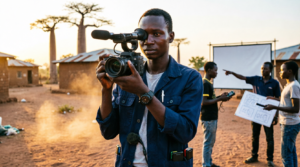
EduFilm’s model uses microgrants, pop-up exhibitions and mentor pairing to support youth-led projects with low overhead. Eligibility favours youth teams that show community buy-in, transparent budgets and short pilot timelines, with typical outputs such as a short film or archive item, a public showing and a learning brief for funders. Manage operational risk with contingency funds, flexible delivery dates and simplified reporting. For an example of youth filmmaking practice in South Sudan, see Through His Lens: How Gabuu Myles is Reshaping South Sudan’s Story, One Frame at a Time.
How to partner, support or research the sector
Sample outreach script: “Hello, I’m [name] from [organisation]. We’re exploring a 3 to 6 month pilot to support youth-led archiving and screenings. Can we schedule a 20-minute call to discuss community priorities and a small grant?”
Follow with a concise checklist covering the purpose and community benefit, partner roles, outputs and timeline, an indicative budget range and the request for a 20-minute introductory call. Keep the initial ask narrow so recipients can respond quickly and with clarity.
Track simple indicators for reporting such as numbers trained, oral histories archived, screenings held and qualitative community feedback. A concise small-grant report might read: “3-month pilot — 12 youth trained; 18 interviews archived; 4 community screenings; stakeholder feedback attached.” Use a modular approach: verify one contact, fund a 3 to 6 month youth-led pilot, then scale with matched funding or larger grants. EduFilm can introduce vetted artists and help design culturally sensitive pilots and monitoring templates. For guidance on working with education, media and film in fragile contexts, refer to Education in Conflict Zones: The Role of Media and Film in South Sudan’s Recovery.
Find the right art and culture organization partners in South Sudan
Use the profiles and case studies above to choose three organisations, draft a one-page partnership brief that explains shared goals and roles, and send that brief by email to begin the conversation. Prioritise partners with local legitimacy, clear consent practices and realistic timelines.
EduFilm is available as a youth-led partner to support film training, cultural archiving and community screenings while helping you measure impact. Next step: map roles and timelines for a single pilot project with one partner from the list and schedule the first meeting this week. Contact EduFilm to request a partnership brief and propose an introductory meeting date.