
The Power of Documentary Filmmaking for Social Change in Africa
When social injustices remain hidden and voices of the marginalized are silenced, traditional advocacy often fails to capture the visceral reality of human experience. Across the continent, documentary filmmaking for social change has emerged as a transformative force, providing a lens through which complex systemic issues can be humanized, documented, and challenged.
From environmental justice campaigns in the Niger Delta to women’s rights movements in Kenya, African filmmakers are demonstrating that the camera is a potent tool for accountability and reform. EduFilm has pioneered comprehensive programs that empower local creators to move beyond mere observation to active social intervention through visual truth-telling and ethical narrative practices.
Why Documentary Filmmaking for Social Change Works
Bridging the Empathy Gap
The power of documentary filmmaking for social change lies in its ability to bridge the empathy gap by placing the viewer directly into the lived experience of another. By humanizing statistics and data, it dismantles stereotypes and replaces apathy with a sense of shared responsibility, driving audiences toward tangible community action.
Beyond Traditional Advocacy Models
Conventional advocacy often relies on text-heavy reports that can feel detached from reality. Organizations like WITNESS Africa demonstrate how video can be used to protect human rights, proving that documentary filmmaking for social change offers a “bottom-up” approach to storytelling where subjects are active participants in their representation.
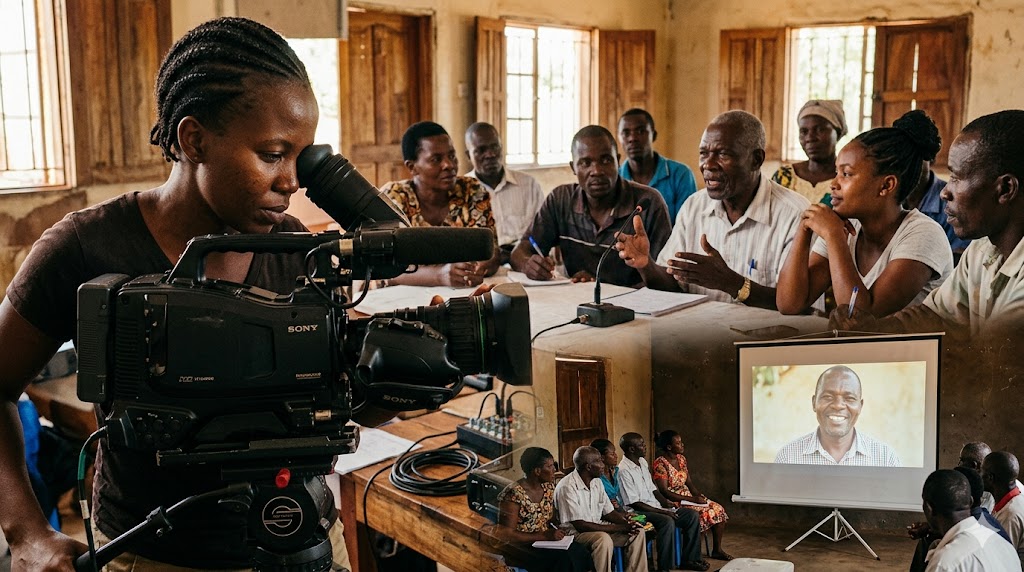
EduFilm’s impact reports demonstrate that visual narratives achieve higher rates of sustained audience engagement compared to traditional media. Community-based screenings foster discussions that challenge the status quo, enabling participants to visualize solutions to local problems through the shared experience of film.
Preserving History and Driving Mobilization
One of the most valuable contributions of documentary filmmaking for social change is its capacity to preserve community history while highlighting contemporary struggles. When people view stories that reflect their own challenges, they find validation and a collective voice, which serves as the foundation for grassroots organizing.
The shared experience of watching an impactful documentary creates a temporary community united by emotional engagement. These screenings often lead to post-viewing workshops where viewers can brainstorm local interventions, turning the inspiration found on screen into measurable progress in their own neighborhoods.
“A camera is not just a recording device; it is a mirror we hold up to society. When people see their own stories reflected with dignity, they find the courage to demand change.” — Documentary Filmmaker, South Sudan
The Future of Documentary Filmmaking for Social Change
Across Africa, numerous examples demonstrate the effectiveness of film as an advocacy tool, with documented outcomes including increased government transparency and the successful defense of community land rights through visual evidence.
EduFilm’s Approach to Social Impact Media
EduFilm integrates technical mastery with social responsibility, ensuring creators develop the creative skills and ethical awareness necessary for documentary filmmaking for social change. This comprehensive approach ensures that the “social” in social media leads to real-world transformation.
Support Social Change Through Film
Your support helps EduFilm equip the next generation of African filmmakers with the tools they need to tell stories that matter. Join us in transforming visual narrative into social action.