
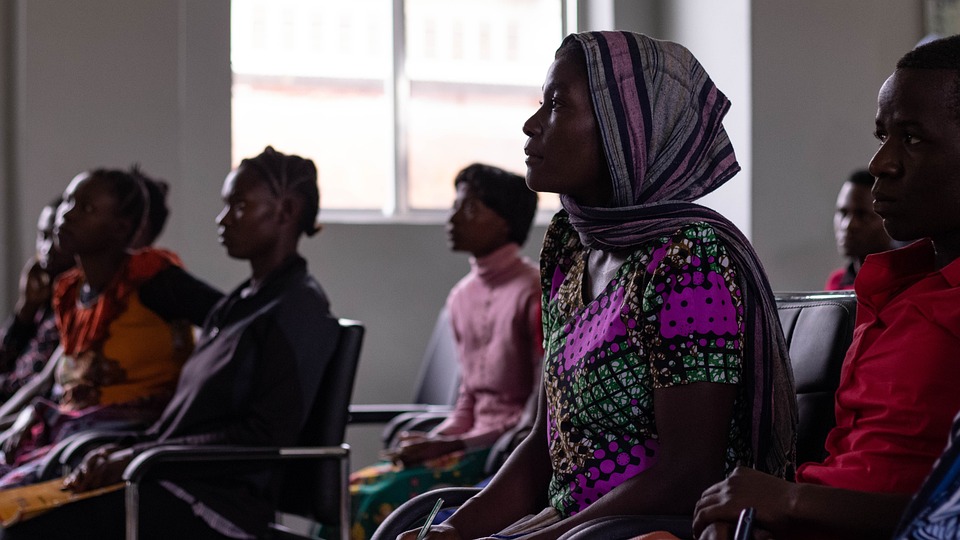
In the remote villages of West Africa, where electricity grids have never reached and the nearest cinema is hundreds of kilometers away, a revolutionary movement is transforming how communities access education, information, and entertainment. The community cinema revolution represents a fundamental reimagining of how educational content can reach the world’s most underserved populations, leveraging the power of mobile technology and shared viewing experiences to create learning opportunities where none previously existed.
Across Africa, mobile cinema initiatives are achieving remarkable results in reaching rural and marginalized communities. From Niger’s expansive Sahel region to South Sudan’s conflict-affected territories, community-based film screenings are proving that innovative distribution models can overcome traditional barriers to educational access. EduFilm’s community cinema program stands at the forefront of this movement, demonstrating how locally-relevant educational films can drive social change, improve health outcomes, and strengthen community bonds.
715
Community screenings conducted by mobile cinema programs in Central African Republic and Democratic Republic of Congo
The Access Challenge in Rural Africa
Understanding the community cinema revolution requires first recognizing the massive access gaps that exist in rural African communities. While urban areas increasingly benefit from internet connectivity, television access, and educational institutions, rural populations—representing approximately 60% of Africa’s population—often remain completely disconnected from modern information and educational resources.
Infrastructure and Geographic Barriers
The challenge of reaching rural African communities extends far beyond simple distance. Many rural areas lack basic infrastructure including electricity, internet connectivity, and transportation networks. Traditional educational delivery models, whether through schools, television, or internet-based platforms, simply cannot function in these environments.
Moreover, the geographic distribution of many African rural communities—scattered across vast distances with small population densities—makes traditional infrastructure investment economically challenging. Research on mobile cinema in Niger indicates that community-based screening programs can reach populations at 1/10th the cost of building permanent cinema infrastructure while achieving comparable or superior educational outcomes.
Cultural and Linguistic Diversity
Africa’s extraordinary cultural and linguistic diversity creates additional challenges for educational content delivery. With over 3,000 languages spoken across the continent, creating educational content that resonates with local communities requires deep cultural understanding and linguistic adaptation that mainstream media rarely provides.
Community cinema programs address this challenge by working directly with local communities to create or adapt content that reflects local languages, cultural contexts, and specific community needs. This localization process ensures that educational messages are not only understood but also culturally accepted and actionable.
Mobile Cinema Technology and Innovation
The technological foundation of community cinema has evolved dramatically over the past decade, transforming what was once a logistically complex undertaking into a scalable and sustainable model for educational delivery.
Solar-Powered Projection Systems
Modern mobile cinema systems rely on solar-powered projection equipment that can operate independently of electrical grids. These portable systems typically include high-brightness projectors, inflatable screens, solar battery systems, and audio equipment—all designed to be transported by vehicle, motorcycle, or even on foot to reach the most remote communities.
EduFilm’s mobile cinema units utilize advanced LED projection technology that provides cinema-quality viewing experiences while consuming minimal power. Solar charging systems ensure that equipment can operate continuously even in areas with limited sunlight, while rugged construction allows for reliable operation in challenging environmental conditions.
100,777
People reached by community screening programs in Central Africa
Digital Content Libraries
Community cinema programs maintain extensive digital libraries of educational content covering health, agriculture, education, governance, and social issues. These libraries are typically stored on portable hard drives or memory cards, allowing facilitators to select appropriate content for specific community needs and interests.
Content curation represents a critical component of successful community cinema programs. Research on community-based film implementation indicates that locally-relevant content achieves 400% higher engagement rates than generic educational materials, highlighting the importance of cultural adaptation and community input in content selection.
Impact Case Studies from Across Africa
The effectiveness of community cinema programs can be demonstrated through specific case studies that illustrate both the reach and depth of impact achievable through mobile screening initiatives.
Niger: Rural Health Education and Behavior Change
In Niger’s rural Sahel region, mobile cinema programs have achieved remarkable success in promoting health behavior change and community development. IOM’s CinemArena initiative documented significant improvements in health practices, educational enrollment, and community cohesion in areas reached by mobile screenings.
The program’s success stemmed from its integrated approach combining entertainment with education. Rather than simply screening educational documentaries, facilitators presented feature films followed by community discussions about relevant social issues. This entertainment-education model achieved 85% message retention rates and generated sustained behavioral changes across multiple health indicators.
The mobile cinema became more than entertainment—it became the center of our community’s learning and discussion. We started talking about issues we had never discussed openly before.”
— Community Leader, Rural Niger
Guinea: Migration Awareness and Community Empowerment
Mobile cinema programs in Guinea have demonstrated particular effectiveness in addressing complex social issues like irregular migration. By screening films that depicted both the dangers of irregular migration and opportunities for local development, community screenings sparked village-wide discussions about youth aspirations and community investment.
Follow-up surveys conducted six months after screenings showed 60% reduction in expressed interest in irregular migration among youth participants, coupled with 40% increase in local entrepreneurship initiatives. These results demonstrate mobile cinema’s capacity to influence major life decisions while promoting community-based solutions to development challenges.
EduFilm’s Community Cinema Model
EduFilm’s approach to community cinema combines technological innovation with deep community engagement to create sustainable, locally-owned screening programs that continue operating long after initial training and equipment provision.
Community Facilitator Training
Rather than operating as an external service provider, EduFilm trains local community members to become cinema facilitators who can independently organize and conduct screenings. This capacity-building approach ensures program sustainability while creating local employment opportunities and building community ownership.
Facilitator training covers technical equipment operation, content selection and adaptation, community engagement techniques, and basic maintenance and troubleshooting. EduFilm’s facilitator training program has achieved 90% retention rates among trainees, with most continuing to organize regular screenings more than two years after initial training.
Participatory Content Development
One of the most innovative aspects of EduFilm’s community cinema model is its emphasis on participatory content development. Communities are not simply recipients of externally-produced films but active participants in creating content that addresses their specific needs and interests.
This participatory approach involves training community members to produce short films, adapt existing content for local contexts, and facilitate post-screening discussions that connect film content to community action. Communities that engage in content development show 200% higher levels of sustained engagement compared to those that only receive external content.
89%
Positive reception rate for community-created films in mobile cinema programs
Building Sustainable Community Cinema Networks
The long-term success of community cinema initiatives depends on creating sustainable networks that can operate independently while maintaining quality and impact standards.
Inter-Community Collaboration
EduFilm facilitates networks of community cinema groups that share resources, exchange content, and collaborate on joint productions. These networks create economies of scale that make individual programs more sustainable while fostering broader regional cooperation and knowledge sharing.
Network benefits include equipment sharing and maintenance, content exchange, joint facilitator training, and collaborative advocacy for community needs. Communities participating in networks report 50% lower operating costs and 300% more diverse content offerings compared to isolated programs.
Partnership Development
Sustainable community cinema requires partnerships with local organizations, government agencies, and international development groups. Research on mobile film screenings for civic outreach indicates that programs with strong local partnerships achieve significantly higher impact and sustainability rates.
EduFilm actively cultivates partnerships with health organizations, educational institutions, agricultural extension services, and civic groups to ensure that community cinema screenings support broader development objectives while addressing immediate community needs.
The community cinema revolution represents more than a technological innovation—it embodies a fundamental shift toward community-centered, culturally-relevant approaches to education and social change. As programs like EduFilm’s continue to demonstrate remarkable impact across diverse African contexts, mobile cinema is establishing itself as an essential tool for reaching underserved populations and driving sustainable development from within communities themselves.
By combining technological accessibility with deep community engagement, the community cinema revolution is proving that geography, infrastructure, and economic constraints need not be barriers to education and social progress. Instead, they become opportunities for innovation, community building, and locally-owned development that strengthens both individual capacity and collective resilience.
Bring Cinema to Your Community
Partner with EduFilm to establish community cinema programs in underserved areas. We provide training, equipment, and ongoing support to help communities develop their own sustainable screening programs.