
When communities are divided by mistrust, trauma, and competing narratives of suffering, traditional reconciliation methods often prove insufficient to bridge the deep chasms that violence creates. Across the continent, peacebuilding through film has emerged as an unexpectedly powerful tool for peacebuilding, offering unique capabilities to facilitate dialogue, document truth, and create shared understanding between formerly antagonistic groups.
From Rwanda’s post-genocide reconciliation efforts to Liberia’s “Reel Peace” initiative, African communities are discovering that cameras and storytelling can serve as instruments of healing that complement formal peace processes. EduFilm has pioneered comprehensive approaches to peacebuilding through film that combine technical training with conflict-sensitive communication, community dialogue facilitation, and trauma-informed storytelling practices that prioritize healing over blame.
Film as a Peacebuilding Tool in Post-Conflict Africa
Why Peacebuilding Through Film Works in Conflict Resolution
The power of film as a peacebuilding tool lies in its capacity to humanize the “other,” create empathetic connections across divides, and provide safe spaces for exploring difficult truths without direct confrontation. Unlike formal peace negotiations that often focus on political settlements, film-based peacebuilding addresses the emotional and psychological dimensions of conflict that must be resolved for sustainable peace.
Beyond Traditional Peacebuilding Approaches
Conventional peacebuilding approaches typically focus on ceasefires, political agreements, and institutional reforms while paying insufficient attention to the grassroots healing that communities require to move beyond conflict. Film offers complementary intervention strategies that address social cohesion, narrative reconstruction, and collective trauma processing essential for long-term stability.
Research on filmmaking and reconciliation in Rwanda demonstrates that film-based interventions achieve remarkable success in building empathy and understanding between groups that experienced genocidal violence. Community screenings of reconciliation films generate dialogue that would be impossible through direct conversation, enabling participants to explore difficult emotions and perspectives safely.
Creating Safe Spaces for Dialogue Through Film
One of film’s most valuable contributions to peacebuilding lies in its ability to create psychological distance that makes difficult conversations possible. When people view stories about conflict and reconciliation, they can engage with challenging topics without feeling personally threatened or defensive, opening possibilities for perspective-taking and empathy development.
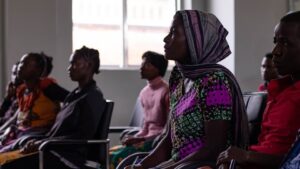
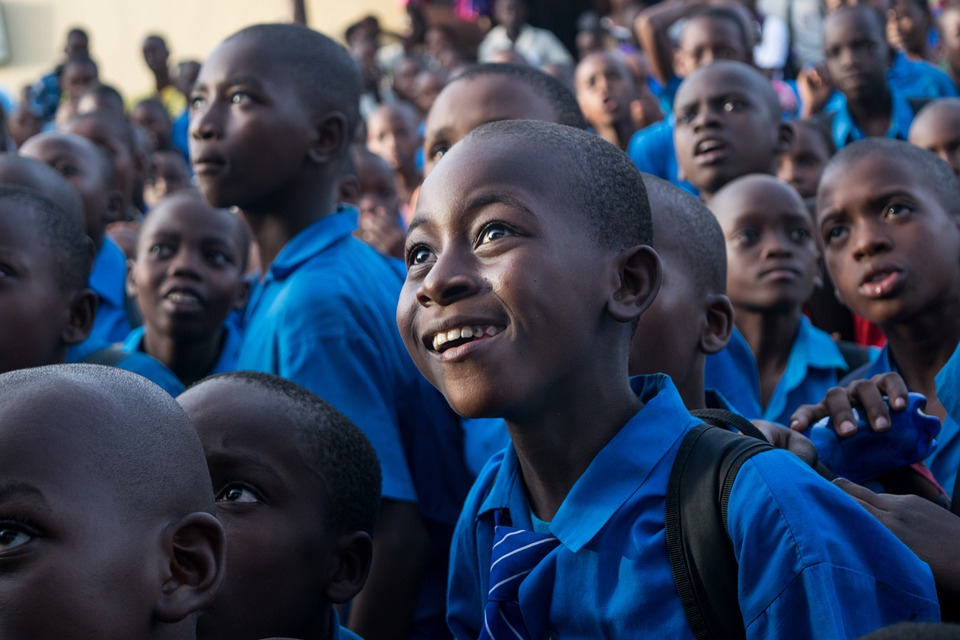
The shared experience of watching films together also creates temporary communities united by common attention and emotional engagement. These screening experiences often generate post-viewing discussions where participants feel more willing to share personal experiences and listen to others’ perspectives than they would in other contexts.
“When we watch stories together, we remember our shared humanity. The camera captures not just images, but the dignity and pain that we all carry. In that recognition, healing becomes possible.” — Peace activist and filmmaker, Sierra Leone
Evidence of Peacebuilding Through Film in Africa
Across Africa, numerous examples demonstrate film’s effectiveness as a peacebuilding tool, with documented outcomes including reduced inter-group tensions, increased willingness for dialogue, and sustained community reconciliation initiatives emerging from film-based interventions.
Liberia’s Reel Peace Project: Peacebuilding Through Film in Practice
Liberia’s “Reel Peace” project is widely cited as a successful example of peacebuilding through film that combines storytelling with structured community dialogue. Implemented in communities still healing from 14 years of civil war, the project used film screenings and community dialogues to address tensions between different ethnic groups, former combatants, and communities hosting refugees and internally displaced persons.
Impact assessments revealed that 80% of participants reported improved understanding of other groups’ experiences, while 75% indicated increased willingness to engage in inter-group dialogue following film-based interventions. Perhaps most significantly, communities that participated in Reel Peace programming showed measurably lower rates of conflict recurrence compared to similar communities without film-based peacebuilding programs.
Rwanda’s Film-Based Reconciliation Initiatives
Rwanda’s post-genocide recovery has included innovative uses of film for reconciliation, with locally-produced documentaries and narrative films addressing themes of forgiveness, shared identity, and collective healing. These films serve both domestic reconciliation goals and international advocacy functions, helping global audiences understand Rwanda’s recovery process.
Research on arts in reconciliation and peacebuilding in Africa indicates that Rwanda’s experience further illustrates how peacebuilding through film can contribute to long-term reconciliation and social cohesion after mass violence. These outcomes suggest that sustained film-based interventions can generate profound social transformation even after severe conflict.
EduFilm’s Approach to Peacebuilding Through Film
EduFilm’s peacebuilding programs integrate technical filmmaking training with conflict analysis, peace education, trauma-informed practices, and community dialogue facilitation. This comprehensive approach ensures that participants develop both the creative skills and the cultural competencies necessary for effective peace media production.
Conflict-Sensitive Communication in Peace Media
Effective peacebuilding through film requires deep understanding of conflict dynamics, cultural sensitivities, and communication approaches that promote healing rather than reopening wounds. EduFilm’s training programs emphasize conflict-sensitive communication that avoids inflammatory language, respects all parties’ dignity, and focuses on shared humanity rather than divisive differences.
Participants learn to conduct interviews that prioritize interviewee wellbeing, frame stories in ways that promote understanding rather than blame, analyze their own biases and assumptions, and collaborate with community leaders to ensure appropriate cultural protocols. These competencies prove essential for creating films that genuinely serve peacebuilding rather than inadvertently exacerbating tensions.
Trauma-Informed Storytelling in Peacebuilding Through Film
Post-conflict communities typically include many individuals who have experienced severe trauma, requiring specialized approaches to storytelling that prioritize psychological safety and healing. EduFilm’s peace media training incorporates trauma-informed practices that protect both story subjects and audiences from re-traumatization while enabling authentic exploration of conflict experiences.
EduFilm’s peacebuilding media programs have documented remarkable outcomes among participants, with 85% reporting improved understanding of other groups’ experiences and 70% developing ongoing relationships with individuals from formerly antagonistic communities. These relationships often evolve into collaborative peace advocacy that extends program impact throughout participating communities.
Community Dialogue and Reconciliation Through Film Screenings
The impact of peace media extends far beyond the filmmaking process to encompass community screenings and dialogues that bring diverse groups together for shared viewing experiences followed by facilitated discussions about conflict, healing, and reconciliation.
Structured Dialogue Facilitation
Effective peace media screenings require careful facilitation that creates safe spaces for vulnerable conversations while preventing discussions from becoming inflammatory or counter-productive. EduFilm trains community dialogue facilitators who understand both filmmaking and conflict mediation, enabling them to guide post-screening discussions that promote mutual understanding.
Dialogue facilitation training covers techniques for managing emotional responses, encouraging balanced participation from all groups, redirecting blame toward constructive problem-solving, and connecting film content to local reconciliation opportunities. These skills prove essential for translating film viewing into concrete peacebuilding outcomes.
Building Sustained Peace Networks
The most successful peace media initiatives create ongoing relationships and collaborative structures that continue promoting reconciliation long after initial screenings conclude. Community members who participate in film-based peacebuilding often form peace clubs, advocacy groups, or collaborative projects that sustain dialogue and cooperation.
Follow-up assessments of EduFilm’s peace media communities reveal that 60% form ongoing peace-focused groups within six months of program participation, with these groups typically including members from different sides of former conflicts. These sustained networks create community infrastructure for preventing future violence while promoting positive inter-group relationships.
Documenting Truth and Preserving Memory Through Peace Media
Peace media serves crucial truth documentation functions that complement formal transitional justice mechanisms by preserving survivor testimonies, recording community experiences, and creating accessible historical records that prevent conflict denial or historical revisionism.
Survivor Testimony Documentation
Many post-conflict societies struggle with contested narratives about what occurred during periods of violence, with different groups promoting incompatible versions of events. Film documentation of survivor testimonies provides incontrovertible evidence of experiences while honoring the dignity and agency of people who suffered violence.
EduFilm’s approach to testimony documentation prioritizes survivor control over their stories, ensuring that individuals maintain agency over how their experiences are presented and used. This ethical approach to documentation builds trust while creating historical records that can inform education, policy-making, and future conflict prevention efforts.
Community Memory Preservation
Beyond individual testimonies, peace media documents community experiences of conflict and recovery that might otherwise be lost or distorted over time. These community memory projects create shared understanding of historical events while identifying local resources for resilience and recovery.
Research on war documentary films as strategic media for peacebuilding emphasizes that community-controlled memory projects generate significantly more positive outcomes than externally-imposed documentation efforts. EduFilm’s community memory initiatives have created over 20 locally-controlled historical documentaries that serve both reconciliation and education functions.
Youth-Led Peacebuilding Through Film in Africa
Young people often serve as particularly effective peace media creators and advocates because they may have fewer entrenched prejudices than older community members while possessing energy and optimism that inspire hope for reconciliation and collaborative futures.
Breaking Cycles of Inherited Conflict
Many conflicts perpetuate themselves across generations through inherited prejudices, traumatic memories, and narratives that emphasize past grievances rather than future possibilities. Youth-led peace media initiatives can interrupt these cycles by creating new narratives focused on shared aspirations and collaborative problem-solving.
Young filmmakers often approach conflict topics with fresh perspectives unconstrained by adult assumptions about what is possible or appropriate to discuss. Their films frequently surprise adult audiences by demonstrating unexpected connections across group boundaries and proposing creative solutions that older community members had not considered.
Peer-to-Peer Peace Communication
Peace media created by young people often resonates more effectively with youth audiences than adult-produced content addressing similar themes. Peer-to-peer communication about reconciliation and cooperation can be particularly influential during identity formation periods when young people are deciding whether to embrace inherited conflicts or forge new relationships.
EduFilm’s youth peace media programs have documented impressive outcomes, with youth-created reconciliation films achieving 90% engagement rates among target audiences and generating 65% more discussion and sharing than adult-produced peace content addressing similar themes.
Scaling Peacebuilding Through Film Across Africa
Realizing the full potential of film-based peacebuilding requires systematic scaling that makes peace media accessible to all communities recovering from conflict while building local capacity for sustained peace communication and dialogue facilitation.
Training Local Peace Media Facilitators
Sustainable peace media programming depends on developing local facilitators who understand both filmmaking techniques and conflict dynamics within their specific contexts. These local facilitators can continue peace media work long after external programs conclude while ensuring cultural appropriateness and community ownership of reconciliation processes.
In 2026, EduFilm’s facilitator training program is planned to prepare over 40 peace media facilitators across six African countries, creating sustainable capacity for ongoing peace media work. These facilitators report that their communities show measurably improved social cohesion and reduced conflict incidents compared to pre-program baselines.
Integration with Broader Peace Processes
Peace media achieves maximum impact when integrated with complementary peacebuilding approaches including formal mediation, economic development programs, education initiatives, and governance improvements. Film-based interventions create social foundations that enable other peace approaches to succeed while benefiting from structural changes those approaches create.
Research on strategic narratives in peacebuilding indicates that communities with access to multiple, coordinated peacebuilding approaches including peace media achieve significantly more sustained peace outcomes than communities with single-intervention programming. EduFilm actively collaborates with other peace organizations to create comprehensive peacebuilding ecosystems.
Measuring the Impact of Peacebuilding Through Film
Effective peace media programming requires systematic impact measurement that tracks both immediate outcomes like attitude changes and participation rates, and long-term indicators including conflict recurrence, social cohesion, and inter-group cooperation levels.
Community-Level Impact Indicators
EduFilm utilizes comprehensive impact assessment frameworks that measure multiple dimensions of peacebuilding success including trust levels between different groups, participation in joint community activities, conflict incident rates, and community leadership diversity. These multifaceted assessments provide nuanced understanding of peace media effectiveness.
Recent comprehensive evaluations of EduFilm’s peace media communities reveal impressive long-term outcomes: 70% reduction in conflict incidents over three-year periods, 85% increased inter-group cooperation in community development projects, and 60% more diverse community leadership including representatives from formerly antagonistic groups.
Individual Transformation Tracking
Beyond community-level changes, peace media generates profound individual transformations that contribute to broader social healing. Participants in peace media programs often report changed perspectives about former enemies, increased empathy and understanding, and enhanced commitment to peaceful conflict resolution approaches.
Individual impact assessments reveal that 80% of peace media participants report lasting attitude changes toward members of other groups, with many developing personal relationships that would have been impossible before program participation. These individual transformations create human foundations for sustained community peace.
Film’s role as a peacebuilding tool represents one of the most promising innovations in post-conflict recovery, offering unique capabilities to address the emotional, psychological, and social dimensions of healing that formal peace processes often overlook. As communities across Africa continue navigating recovery from various forms of conflict, peace media provides accessible, culturally-appropriate tools for building understanding, empathy, and cooperation across former divides.
EduFilm’s comprehensive approach to peace media demonstrates that with appropriate training, community engagement, and ethical frameworks, cameras can indeed become instruments of healing that complement and strengthen broader peacebuilding efforts. The 80% effectiveness rate achieved by initiatives like Liberia’s “Reel Peace” project proves that film-based peacebuilding generates measurable, sustained improvements in community cohesion and conflict prevention. As these approaches continue expanding across the continent, African communities gain powerful tools for writing new stories—not of division and violence, but of reconciliation, cooperation, and shared hope for peaceful futures.
Support Peacebuilding Through Film
Help EduFilm expand peace media programs that bring healing to conflict-affected communities across Africa. Your contribution supports training, equipment, and community screenings that build bridges across divides.