
The EduFilm Director of Photography’s IGAD Media Awards nomination for “Climate Resilience: Inspiring Hope, Driving Change” highlights a career built on amplifying marginalized voices
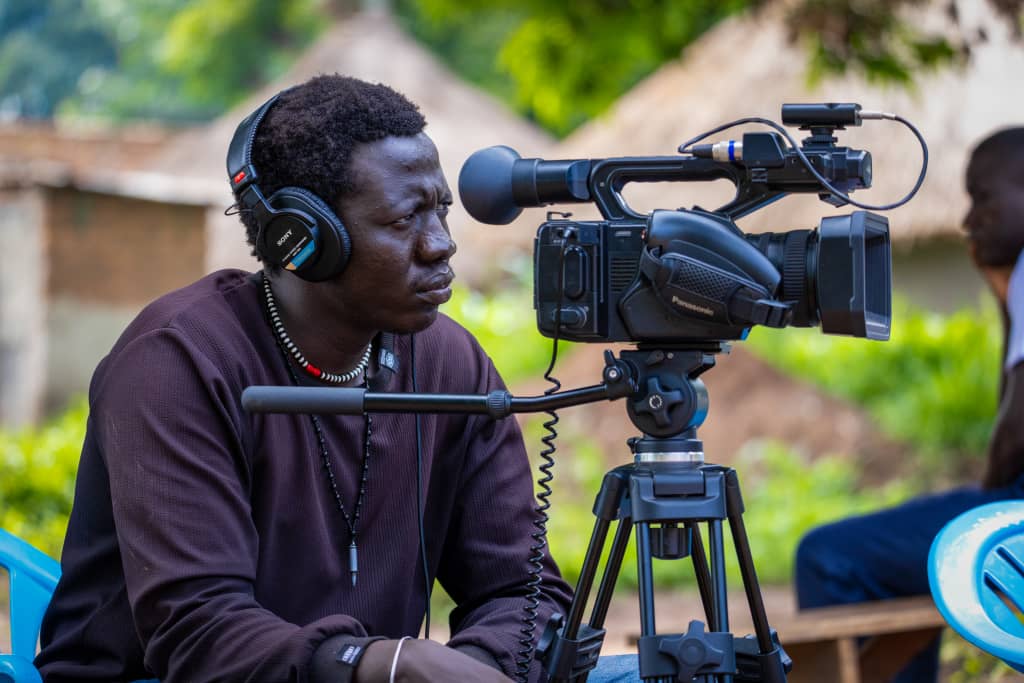
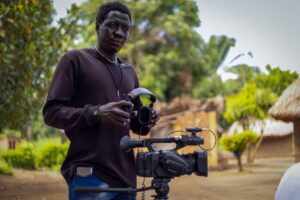
JUBA, South Sudan — In the soft morning light filtering through the trees of a rural South Sudanese village, Gabriel Gatluak Wal adjusts his camera tripod with practiced precision. Behind the viewfinder, he’s not merely capturing images—he’s documenting resilience, preserving dignity, and challenging the narrow narratives that often define his country.
Known professionally as Gabuu Myles, the filmmaker has built a reputation as one of South Sudan’s most compelling visual storytellers. Now, his documentary short “Climate Resilience: Inspiring Hope, Driving Change” has earned him a nomination for the prestigious IGAD Media Awards 2025, recognition that places him among East Africa’s most influential media practitioners.
“Every frame tells a story that someone needs to hear,” Gabuu says, reflecting on the film that captured the attention of regional judges. “My responsibility isn’t just to record—it’s to reveal the humanity in every situation, especially those the world tends to overlook.”
A Film That Speaks Truth to Crisis
“Climate Resilience: Inspiring Hope, Driving Change” opens with a stark reality: “In the heart of East Africa, South Sudan—a land in the East African region—faces a silent storm.” Over the film’s compact 103 seconds, Gabuu weaves together voices and visuals that transform a global crisis into intimate human stories.
The documentary doesn’t shy away from harsh truths. Droughts decimate crops. Floods sweep away homes. The climate crisis is decimating communities across South Sudan. But Gabuu’s lens reveals something international media often misses: amid the hardship, hope grows.
“I am a local farmer based in Yambio State,” one subject shares in the film. “I started farming for quite a while and we are doing well.” Another farmer explains their long-term vision: “We are doing this farming for a reason that our children can harvest them tomorrow or in the nearby future so that it can sustain their life. Because we all understand the economic situation in the country.”
From the flooded plains of Jonglei to the schools of Juba, Gabuu’s camera captures communities turning adversity into action. Farmers embrace climate-smart agriculture. Women lead reforestation efforts. Young people innovate with renewable energy solutions. These aren’t merely adaptation strategies—they’re acts of courage.
“These are not just solutions,” the film’s narrator observes. “They are acts of courage.”
The film concludes with a message that encapsulates Gabuu’s entire philosophy as a filmmaker: “The climate crisis is real, but so is the spirit of South Sudan. And when hope meets action, change becomes unstoppable.”
A Career Built on Authenticity
As EduFilm’s Director of Photography and Film Production Lead, Gabuu manages all technical and creative aspects of the organization’s film projects. But his journey to this nomination reflects a broader commitment to using media as a tool for social change.
His portfolio reads like a map of contemporary South Sudan’s most pressing challenges and triumphs. Working with UNHCR, he documented the experiences of returnees and refugees in Wedweil, capturing narratives of displacement that humanize statistics often reduced to headlines. With UNDP during the Governors’ Forum, he provided critical media coverage that brought policy discussions to broader audiences. In Yambio, collaborating with the International Trade Centre, his lens focused on women’s empowerment initiatives, showcasing stories of economic resilience in communities rebuilding after conflict.
“Gabuu has an exceptional ability to capture emotion, resilience, and transformation through film,” notes a colleague from King Media, where he serves as a producer developing documentary films and multimedia projects. “He doesn’t just point and shoot—he builds trust, creates space for authentic storytelling, and ensures that the people he films maintain their agency and dignity.”
The Technical Artist
In an industry where technical proficiency can overshadow storytelling, Gabuu strikes a rare balance. “Climate Resilience” demonstrates this synthesis—sophisticated cinematography paired with authentic voices, compelling visuals that never exploit their subjects.
The film’s brief runtime belies its impact. In less than two minutes, Gabuu constructs a narrative arc that encompasses crisis, response, and hope. The pacing allows breathing room for subjects to speak in their own words. The visual language moves seamlessly from devastated farmlands to scenes of community-led restoration projects, from flooded villages to children playing by clean water sources.
Working with voice artist William Madouk, Gabuu crafted a narration that amplifies rather than overshadows the community voices at the film’s heart. The result is a documentary that feels both intimate and urgent, personal and universal.
Whether he’s filming in challenging field conditions or managing post-production workflows, his approach remains consistent: the story comes first, the technique serves the subject.
At EduFilm, this philosophy shapes every project. As Film Production Lead, he mentors emerging filmmakers, shares technical knowledge, and cultivates a production culture that values both excellence and ethics.
“He’s building more than films,” says an EduFilm team member. “He’s building capacity, training the next generation of South Sudanese storytellers who understand that our stories deserve to be told with the same production values, the same care, as any international production.”
Beyond the Viewfinder
Gabuu’s influence extends beyond his cinematography. As Communication Officer for Kulang Foundation, he manages media communication, documentation, and community outreach storytelling—work that amplifies the voices of grassroots organizations often excluded from mainstream media narratives.
This multidimensional approach to media work reflects his understanding that storytelling is infrastructure. In a country where narratives of conflict and crisis dominate international coverage, Gabuu’s work offers counterpoints: stories of innovation, community resilience, cultural preservation, and quiet heroism.
“South Sudan’s story is complex,” he explains. “The world sees conflict, famine, displacement. Those realities exist, and they matter. But there are also stories of extraordinary courage, of communities supporting each other, of young people building futures against impossible odds. ‘Climate Resilience’ shows what happens when you give communities the platform to tell their own stories of adaptation and survival.”
Why Climate, Why Now
The choice to focus on climate resilience for his IGAD Awards submission is strategic. Climate change disproportionately affects East Africa, yet the region’s voices remain underrepresented in global climate conversations. South Sudan, still recovering from decades of conflict, faces compounding vulnerabilities—yet its communities are developing innovative, locally-led solutions.
“We should embark massively on cultivation because this is the only way that we can alleviate hunger from our midst,” one subject declares in the film, articulating the intersection of climate action and food security that defines survival for millions.
By centering farmers, women leaders, and youth innovators, Gabuu’s film challenges the passive victim narratives often imposed on African communities facing climate change. His subjects aren’t waiting for international rescue—they’re implementing solutions, planting trees, adopting sustainable practices, ensuring their children can harvest tomorrow what they plant today.
“From the villages of Jonglei to the schools of Juba, resilience is not just surviving,” the film observes. “It is transforming. People are building back stronger, greener, together.”
Recognition and Responsibility
The IGAD Media Awards nomination arrives at a pivotal moment for South Sudan’s media landscape. As the country navigates ongoing peace processes and development challenges, the role of independent, ethical journalism and documentary filmmaking becomes increasingly critical.
For Gabuu, the nomination represents validation not just of his individual work, but of a broader movement of South Sudanese media practitioners committed to professional excellence and authentic storytelling.
“This recognition isn’t just mine,” he says. “It belongs to every South Sudanese storyteller working in difficult conditions, often without adequate resources or recognition, to document our reality with honesty and dignity. It belongs to the communities that trust us with their stories—the farmers in Yambio, the displaced families in Wedweil, the women leading reforestation efforts. They’re the real heroes.”
A Vision Forward
As he continues his work with EduFilm, King Media, and Kulang Foundation, Gabuu remains focused on the next story, the next community voice that needs amplification, the next frame that might shift someone’s understanding.
His workspace is cluttered with hard drives containing thousands of hours of footage—testimonies, interviews, observational sequences of communities adapting to climate challenges, building renewable energy solutions, reclaiming land from floods—the raw material of a nation’s visual history. Some will become documentary films, others multimedia projects, still others archival resources for future generations seeking to understand this particular moment in South Sudan’s evolution.
“I want to be part of building a South Sudanese media industry that rivals any in the world,” Gabuu says, his characteristic understatement belying the ambition of the vision. “Not because we’re compensating for anything, but because our stories, our perspectives, our creativity deserve platforms and production values that match their importance.”
Since its release, “Climate Resilience: Inspiring Hope, Driving Change” has been viewed over 100 times on YouTube, sparking conversations about climate action in South Sudan and beyond. The film’s message—that when hope meets action, change becomes unstoppable—resonates far beyond its brief runtime.
Behind him, the camera sits ready on its tripod, waiting for the next subject, the next story, the next opportunity to document the South Sudan that exists beyond the headlines—complex, resilient, and very much still being written.
And somewhere in that footage, in those carefully composed frames and thoughtfully captured moments of farmers tending climate-smart crops and children playing by clean water, lies a truth that awards can recognize but never fully contain: that the person behind the camera matters as much as the subject in front of it, and that genuine storytelling requires not just skill, but profound empathy.
Watch the Nominated Film
Climate Resilience: Inspiring Hope, Driving Change
Gabriel Gatluak Wal (Gabuu Myles) is nominated for the IGAD Media Awards 2025 for his documentary short “Climate Resilience: Inspiring Hope, Driving Change.” He serves as Director of Photography and Film Production Lead at EduFilm, Producer at King Media, and Communication Officer for Kulang Foundation. His work has been featured in projects with UNHCR, UNDP, and the International Trade Centre, among others.
About EduFilm
EduFilm is dedicated to transforming education and social change through powerful documentary storytelling across South Sudan and East Africa.